All about Pruning of Bonsai

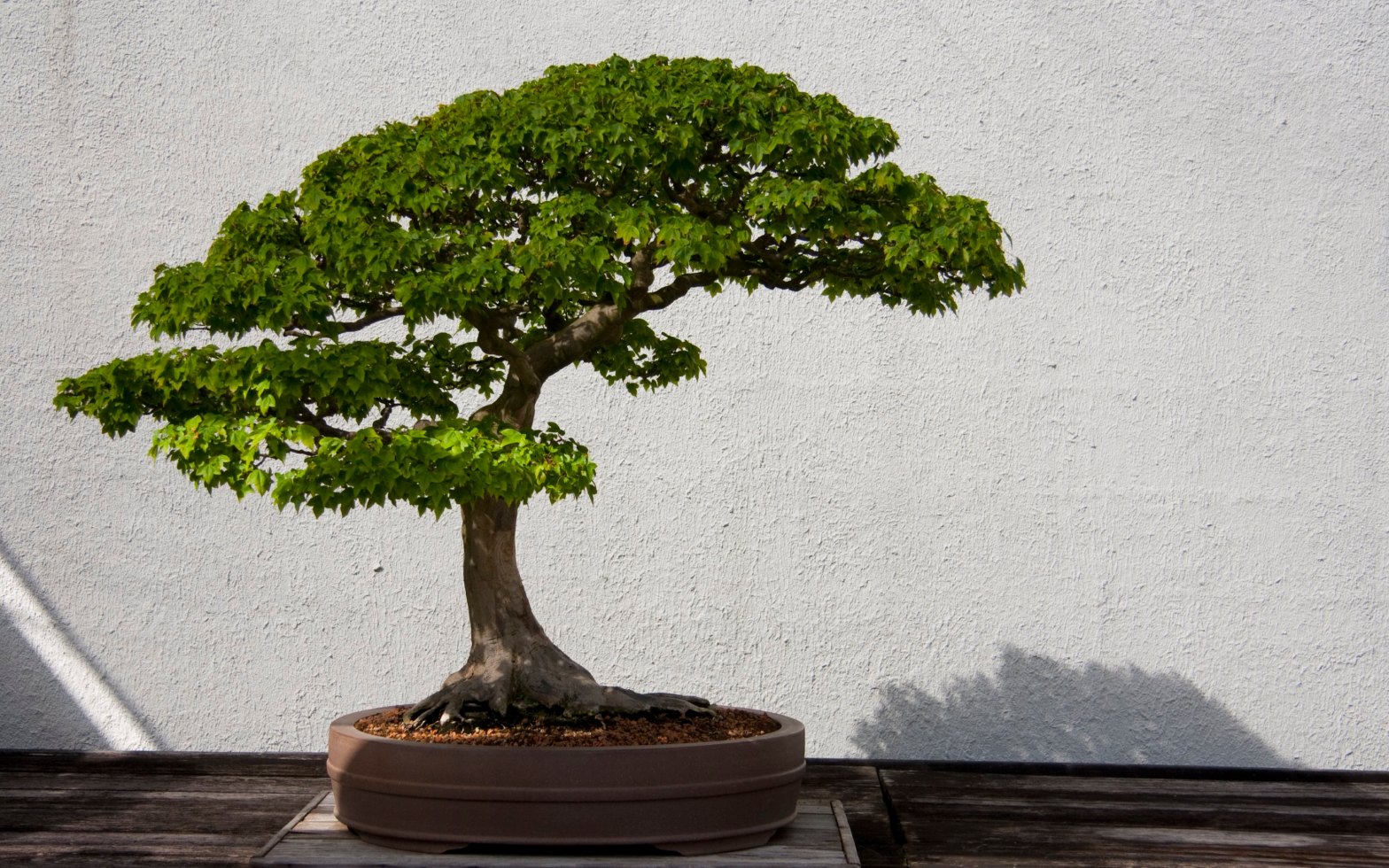
Bonsai trees are known for their beautiful, miniature appearance, which is achieved through careful pruning and shaping. Pruning is the process of selectively removing branches to control the shape and size of the tree. However, pruning is not just about cutting off branches; it requires careful planning and attention to ensure that the tree remains healthy and attractive. In this article, we will discuss how to prune bonsai and the care that should be taken before and after pruning.

Why Prune Bonsai Trees?

There are several reasons why bonsai trees need to be pruned. The primary reasons are:

  1. To shape the tree: Pruning is used to shape the tree and create the desired form. By removing branches strategically, you can create the illusion of a mature, full-sized tree in miniature form.
  2. To control the tree’s size: Bonsai trees are small by nature, but they can still grow quite large if left unchecked. Pruning is used to keep the tree small and in proportion with the pot it’s planted in.
  3. To promote new growth: By removing old or damaged branches, you can stimulate new growth in the tree. This can help to improve the overall health and vitality of the tree.

When to Prune Bonsai Trees?

The timing of pruning depends on the species of bonsai tree and the desired outcome. In general, pruning should be done during the tree’s dormant period, which is typically in the late fall or early winter. This is when the tree is least likely to experience stress from pruning. However, some species of bonsai trees, such as azaleas, should be pruned immediately after they finish blooming in the spring.

Before Pruning: Preparation

Before pruning, there are several steps you should take to prepare the tree and ensure that it is healthy and strong enough to handle the stress of pruning.

  1. Water the tree: Water the tree thoroughly a day or two before pruning. This will help to ensure that the tree is well-hydrated and less likely to experience stress during pruning.
  2. Inspect the tree: Take a close look at the tree and identify any dead, diseased, or damaged branches that need to be removed.
  3. Gather the necessary tools: You will need a pair of pruning shears or scissors, a concave cutter, and wire cutters. Make sure that your tools are sharp and clean before you begin.
  4. Prepare the soil: Remove any weeds or debris from the soil, and make sure that the soil is moist and well-draining.

The Pruning Process

Once you have prepared the tree, it is time to begin pruning. The following steps will guide you through the process:

  1. Choose the branches to be removed: Identify the branches that need to be removed based on your desired outcome. Dead, diseased, or damaged branches should be removed first. Then, you can remove branches that are interfering with the tree’s overall shape.
  2. Cut the branch: Use the pruning shears or scissors to make a clean cut just above the branch collar. The branch collar is the raised area where the branch meets the trunk. Cutting too close to the trunk can cause damage, while cutting too far away can leave a stub that will take longer to heal.
  3. Shape the tree: After removing unwanted branches, you can shape the tree by pruning the remaining branches. Use the concave cutter to remove larger branches, making a clean, concave cut to promote healing. Use the pruning shears or scissors to trim smaller branches and leaves.
  4. Wire the branches: After pruning, you may need to wire some of the branches to help shape the tree. Use wire cutters to cut the wire to the appropriate length and wrap it around the branch, being careful not to

Some additional important tips and information on pruning bonsai:

  1. Pruning Techniques: There are several pruning techniques used in bonsai, including pinching, pruning back to buds, and directional pruning. Pinching involves removing the tips of new growth with your fingers or bonsai scissors, which can help to create denser foliage. Pruning back to buds involves cutting a branch back to a bud, which will encourage new growth in that direction. Directional pruning is used to direct the growth of a branch by cutting it back to a side branch that is growing in the desired direction.
  2. Maintenance Pruning: Regular maintenance pruning is necessary to keep bonsai trees healthy and looking their best. This involves removing any new growth that is unwanted, such as shoots that are growing too long or in the wrong direction. Maintenance pruning should be done throughout the growing season, but be sure to avoid pruning too much at once, as this can stress the tree.
  3. Wiring: Wiring is used to shape the branches of a bonsai tree by gently bending them into the desired position. The wire should be wrapped around the branch in a spiral pattern, starting at the base and working towards the tip. However, be careful not to wire the branches too tightly, as this can damage the bark.
  4. Aftercare: After pruning, it is important to take care of the tree to ensure that it heals properly. Keep the tree out of direct sunlight and wind for a few days, and avoid watering it for at least a day after pruning. You can also apply a wound sealing paste to any large cuts to help prevent infection.
  5. Pruning for Different Tree Species: Different bonsai tree species have different growth patterns and pruning needs. For example, conifers should be pruned in the spring or early summer, while deciduous trees can be pruned in the winter. Research the specific needs of your tree species before pruning to ensure that you are doing it correctly.

In conclusion, pruning is an essential part of maintaining a healthy and beautiful bonsai tree. With proper preparation and technique, you can shape your tree and promote new growth while avoiding damage and stress to the tree. Regular maintenance pruning and care will ensure that your bonsai continues to thrive for years to come.
How to grow bonsai?

Growing bonsai requires a lot of patience, attention, and care. Here are some basic steps to get you started:

  1. Choose the right tree: You can grow a bonsai from a seed or buy a young tree from a nursery. Common bonsai tree species include ficus, juniper, maple, and pine. Make sure the tree you choose is suitable for the climate and environment in which you will be growing it.
  2. Select a container: Choose a container that is appropriate for the size of the tree and has good drainage.
  3. Plant the tree: Plant the tree in a well-draining soil mixture that is rich in nutrients. Bonsai soil can be purchased from a nursery or online.
  4. Prune the tree: Use pruning shears to remove any dead or unwanted branches. This will help to shape the tree and encourage new growth.
  5. Water the tree: Water the tree regularly, making sure the soil is moist but not waterlogged. The frequency of watering will depend on the species of tree and the environment in which it is growing.
  6. Fertilize the tree: Bonsai trees need regular fertilization to maintain their health and vitality. Use a balanced, water-soluble fertilizer and follow the instructions on the packaging.
  7. Repot the tree: Bonsai trees need to be repotted every two to three years to prevent the roots from becoming bound and to replenish the soil.
  8. Protect the tree: Protect the tree from extreme temperatures, wind, and pests. Move the tree indoors during cold weather or use a protective cover.

Remember that bonsai trees require constant care and attention. With patience and dedication, you can create a beautiful and healthy bonsai tree.

Bougainvillea: The Beauty of Your Garden

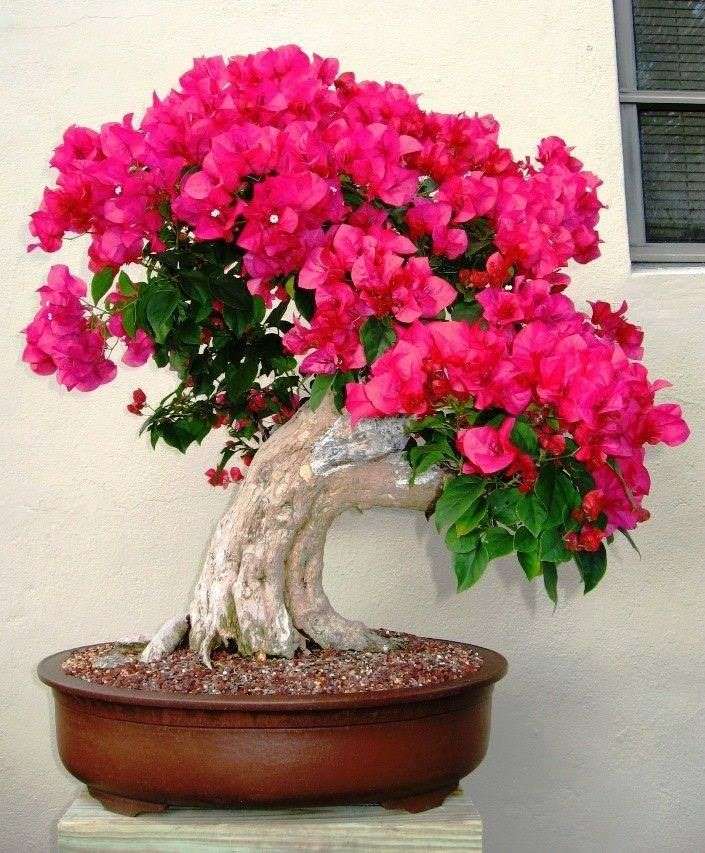
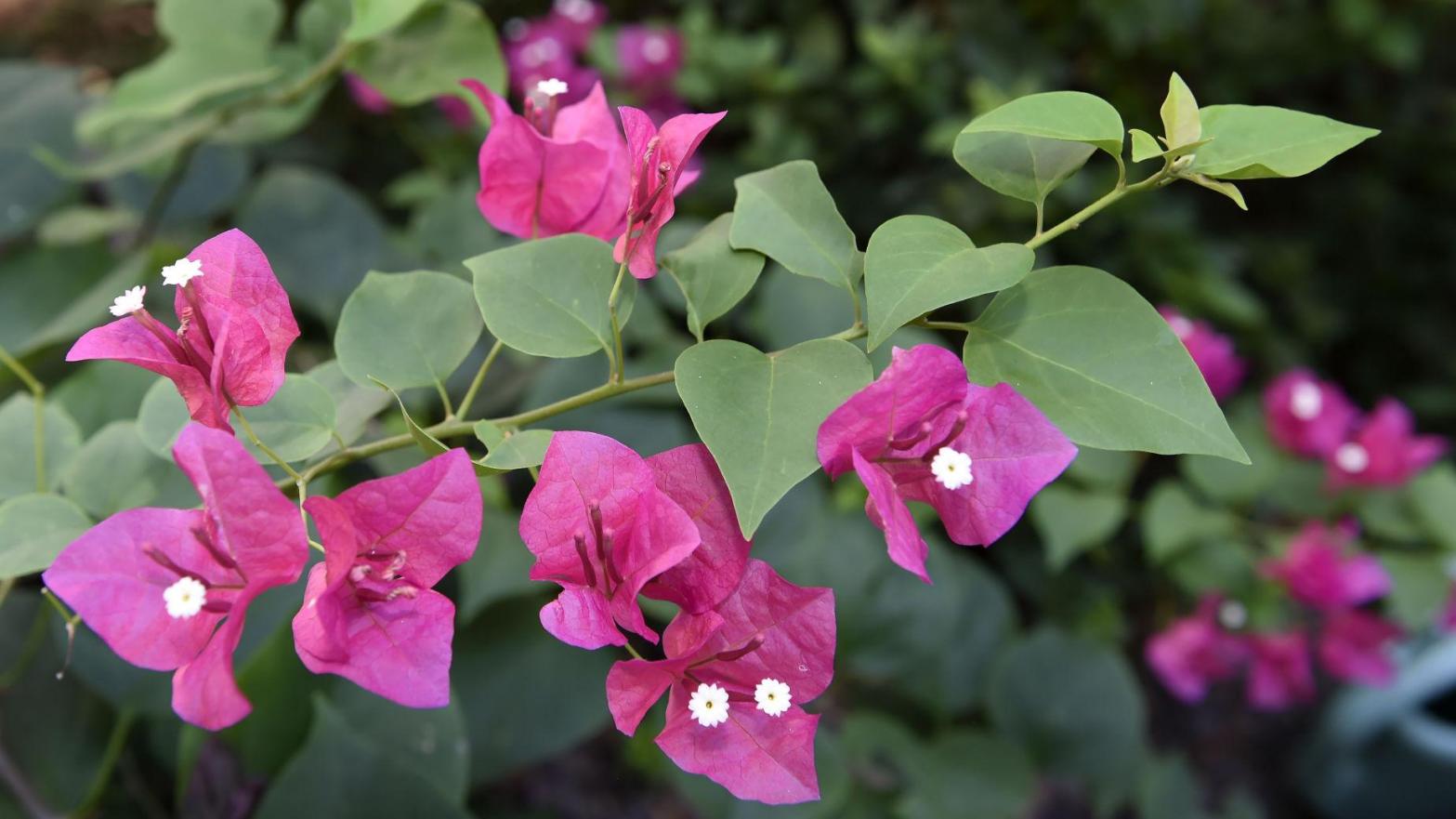
This tropical plant is one of the common and best easy growing bonsai plants which looks tantalizing when it has a full tree bloom. It will just give your garden royal touch. Here underneath you could know everything about your bougainvillea. if you are a beginner this is a jewel and if an expert, there is for you too.  

Landscaping with Bougainvillea

Climate: This plant could thrive well in temperate as well as tropical regions. It blooms at a low temperature so in the temperate region it blooms throughout the year but in the tropical regions it flowers around the winter season.

Temperature: Though this plant is cold loving plant it could grow in a long range of temperatures. About 5 to 45 ⁰C.

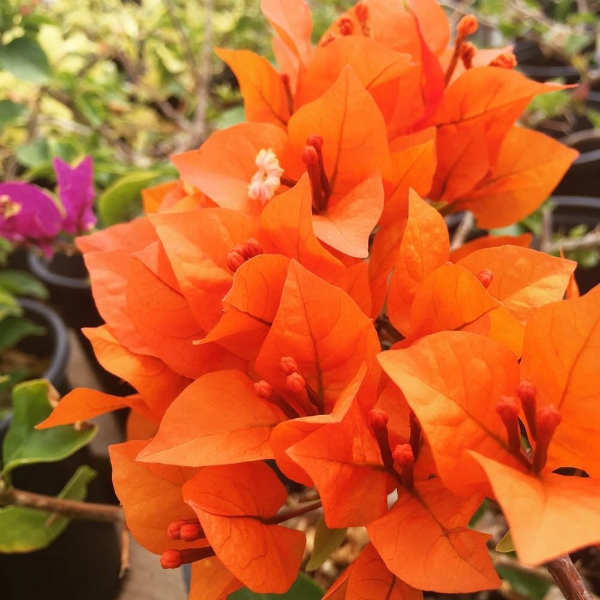
Yellow Bougainvillea

Soil: This plant loves an acidic type of soli. But it could not tolerate staged water so the soil must be well drained.

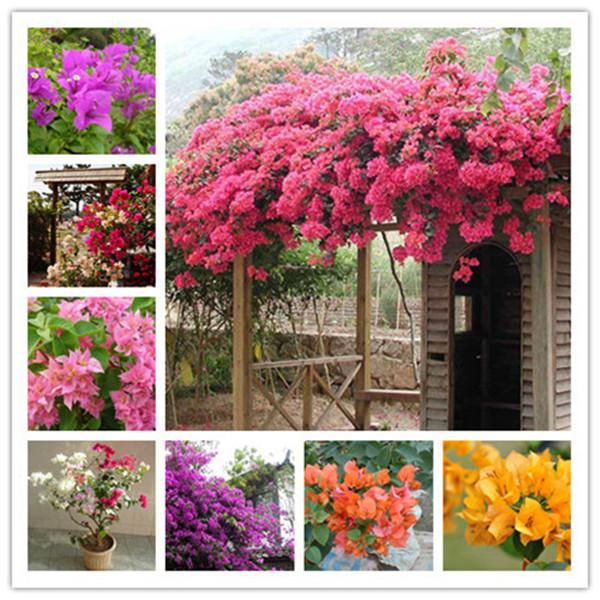
Species: More than 80 species of different colours are there of bougainvillea.

Varieties of Bougainvillea

Sunlight: This plant could be grown over a long range of temperature regions so the sunlight requirements are different according to regions. In low temperature regions providing of full sunlight is better but in the high temperature regions providing a partial sunlight prevents wilting. In blooming season, it requires at least 5-8 hours of direct sunlight.

Watering: Water should be provided regularly but overwatering should not be done. During the flowering the watering should be lowered or it flower less and grow more. (except in high temperature region where there is a risk of wilting)

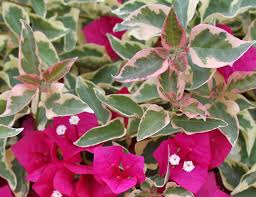
Variegated Red Bougainvillea

Terrain: Always loosen the soil around the trunk to make the soil airy, whether it is in ground or in a container pot. This also helps preventing water lodging problem in soil.

Pruning: bougainvillea is a hard wood type variety. So, it can be grown as a long tree structure as well as in bonsai form. For long structures pruning is only necessary for keeping the plant in a desired shape. But for bonsai both shoot and root pruning are necessary to control the shape and size of the plant.

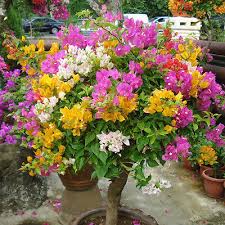
Mixed variety by Grafting

This plant mostly requires a hard pruning after every flowering and a little once a month. Moreover, it should be taken care that the main root of the tap root system be pruned before planting in a pot and should be repoted once in 2-3 years according to the size of the pot.

Fertilizer: each and every plant require Nitrogen Phosphorus Potassium to grow and flower and this is also same. Other than this some micronutrients are required from time to time according to the plant conditions. For knowing the basic fertilizer click here.

Other than this sometimes there arises a problem of Growth Retardation for which the best is gibberellic acid which could be found inorganic in market or in water in which cow dung cakes are drowned for at least 7 days.

Crimson Bougainvillea

During repotting a mixture of vermicompost 40%, used tea/coffee leaf 20%, neem cake 20%, bone meal10%, horn meal 5%, egg shell5% could also provide a good result for long time. Here I will recommend to reduce the use of inorganic fertilizers as in the long run it will harm your plants and the unused remaining, by the plant in the soil, will harm the nature.

Pesticides: there is a benefit that this plant seldom attacked by pests and if attacked then it can be easily get rid of by spraying neem oil or providing neem cake in the soil. For Fungus attack you can use any antifungal spray or powder available in the market.

For any further query about your bougainvillea plant comment here.

Are you doing this to your Plants (Bonsai)?

Bonsai is one of the oldest art form of humankind. Though it simply means the art of growing ornamental, artificially dwarf variety of trees and shrubs in pots. But it’s not so easy to grow a bonsai from beginning. After reading this it will be easy for you to make a cool bonsai plant.

Choosing a plant

For making a beautiful bonsai your first work is to choose a plant. For which there are some criteria, such as 

  • The Climate you live in: Climate is the most important factor. You can’t grow a deciduous plant in very hot temperature, or can’t grow an evergreen in extreme cold.
  • Variety of Plants: For beginners it is better to choose dwarf variety plants. But obviously bonsai made with tall variety plants looks gorgeous.
  • Leaves: If you can choose a small leaf variety plant it will look better later. Though you can reduce the leaf size of your plant afterwards.
  • Sunlight: Those plants that require a low sunlight will be difficult to grow in high sunlight areas.
  • Pots: Flat pots are best to grow bonsai. It gives a vintage look.

There are much more but for starters it’s necessary.

How should you care your plant?

“Time and patience are the only thing you need for transforming your regular plant into a bonsai. “

Different plants have different ways to take care about. You should have proper knowledge about your plant you are trying to grow. 

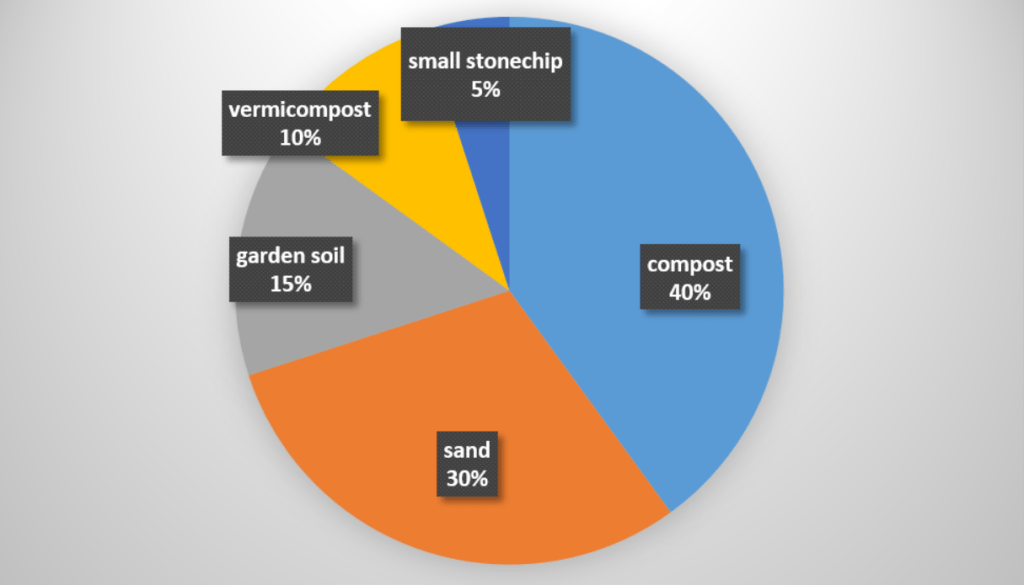
  • Soil: For most of the beginners soil is the most difficult things to choose. Now it depends on what type of plant you are growing. But as a common there should be well drainage. You may use the mixture of approximately 40%compost, 10% vermicompost, (20-30)%sand, 5%small stone chips ( under 10 mm), and (15-25)% garden soil.
  • Drainage: Usually we grow our bonsai in small pots so there should be a well drainage system such that the roots doesn’t rot. For which you have to make holes (as per your pot size) and keep some stone chips on it to make sure it doesn’t cloak.
  • Sunlight: Now sunlight is a big deal for shade lovers you need to grow them not under direct sunlight obviously. But for some plants for which you want to reduce leaf size, you should leave it under direct sunlight such that it could be able to create its required form in small part of its leaf and will not increase its length.
  • Watering: For less rainfall months you need to water regularly. But don’t overwater them. Rather water them twice. And for high rainfall months you should water them when it requires. And sometimes dry up the soil to avoid root rot.

Advanced care

  • Fertilizers: You need to study about your plants what they require. But for bonsai you need to give less fertilizers so as it get stout not grow fast. Sometimes you may use slow fertilizers like bone dust, horn dust or egg shell You should avoid nitrogen base fertilizer and use carbon or potassium based ones. But don’t overfeed them.
  • Root Pruning: You are growing your plants in a pot so you do loosen roots by dig the soil once a month. And in the middle of rainy season you pluck the plant with soil. Trim the roots or rearrange it and again plant it. Don’t disturb the roots too much. You may repot them during this time. And keep watering it daily after this for some days.
  • Shoot Pruning: There are different designs to make with your plants. And for this pruning your stems are important. So whenever you prune keeping mind that cut just over a node or internode, such that it will grow its stem from there. And look that you should cut over a node which is facing the direction in which you want to let it go.
  • Wiring: Sometimes we require to further design our plants. In that case use 6mm aluminium or copper wire but not iron. It is greatly recommended that do the wiring with hand so that you can know the rigidity and strength of the stem, such that it doesn’t break.

Medicines

Pesticides are more or less required to all plants and as per requirements use it over your plants. But what I do is, I have made some neem tree bonsai and kept it in my bonsai collection and for that reason insects are less attracted. Other than neem you may plant any such types of medicinal plants. 

And lastly you should have patience and love for your plants and work you are doing for your plants.

Now it’s very difficult to elaborate everything in one article so to know more follow my website Green Gardens and comments if you have any questions about your bonsai.

Connect with me on: