
From western culture it has been believed that Roses were created by the goddesses of love Aphrodite. According to the legends, her tears and her lover, Adonis’, blood watered the ground from where roses grew.
Apart from the legend now we have started growing roses for the beauty of our heart in the garden. It needs more care and softness than its petals are.
There are more than 150 varieties of rose across the globe. Though this plant thrives best in temperate climate conditions but in torrid temperatures also it blooms in winter.
Ideas:
Roses not only represents romanticism but it also shows the true form of art. Some ideas to grow roses are:
- Gate: Most people like to form gates with rose plants, and it looks gorgeous when it blooms.
- Container: Now it has been an overcoming trend for all gardeners to have roses in pots.
- Indoor: Some peoples are even growing roses in their homes, with a plentiful of sunlight. This gives a delightful fragrance which will make a relaxing feel.
- Bushes: Rose bushes are very common if it been cultivated in a large scale. But many grow it in their gardens too.

How to take care of your rose plants?
- Choosing a plant: Choosing a plant is the most important step to grow any plant. Roses could be broadly categorized into two types Indian Variety and English Variety. Indian variety are small in size but it grows throughout the year even in equatorial regions and has it’s max bloom during winter. Whereas English Variety are larger but only grow in winter in equatorial regions. And both of them blooms well throughout the year in cold climate regions.
- Collection of a plant: Roses are mainly propagated through cutting and grafting. Grafted ones are easier to grow.
- Soil: Though Roses are hungry plants, during the plantation its no need to provide a high quantity of fertilizer. It could be grown best in laterite or alluvial soil. But it could also be grown in mixture of compost 40%, sand 20%, garden soil 20%, bone meal 5% and horn meal 5%.
- Sunlight: It requires at least 6 hours of daily sunlight. But in high temperature regions it should be only provided in winters, during summer it should be kept in shades. Better to keep it under green nets.
- Watering: Soil should be well drained, and deep watering should be done as roses are water loving. As it loves moisture, water spray is also necessary. But all types of watering should be done in the earliest morning or the plant may get shock.

Advanced care:
Fertilizer:
To fertilize your plants you need an expert knowledge of what each component, you are using, have its effect on the plant. And obviously the amount to be used. Roses mainly requires NPK, Magnesium, Sulphur, Calcium and copper, zinc, iron, manganese, boron are also required in very small quantities.
- Organic: It’s better to use organic fertilizer to each and every plant. It will not give an instant effect but is a good choice for long run. Organic fertilizer could be used once a month. And surely to be given just before winter. Now there are two recipes
- Solid: vermicompost 40%, used tea/coffee leaf 20%, neem cake 20%, bone meal10%, fish meal 5%, egg shell5%. Precaution: This is not to be provided for newly planted plants. This is to be given in adequate amount. 50gms for small plants 100gms for large plants and 500gms for large plants (only in soil). No undecomposed fertilizer to be added as there will be a chance of fungus.
- Liquid: In 5 litres of water mustard cake 100gm, neem cake 200gm, banana peel 200gm, orange peel 200gm to be decomposed for 10 days and then the water could be provided to the plant after dilution.
- Inorganic: If you are not satisfied with the organic fertilizer and want to have a quick effect on plants then you may use PGP (Plant Growth Proteins), Seaweed Fertilizer, Micronutrients, Vitamins etc. But remember in case of inorganics a plant uses only a little amount and the rest are stored in soil which makes the fertilizers unusable for future and that’s acidify the soil. So if you use inorganic fertilizers then apply less than the amount mentioned to apply on the soil.
Pruning:
Roses are most prone to bacteria and fungi. And rotten flowers, half yellow or brown leaves will boost up the fungi attacks. For this it need to be pruned (2-3 inches) whenever you see an old flower or yellow leaves before it starts to rot. This will also increase flowering rate by raising branches. This is known as soft pruning.
Removing Suckers:
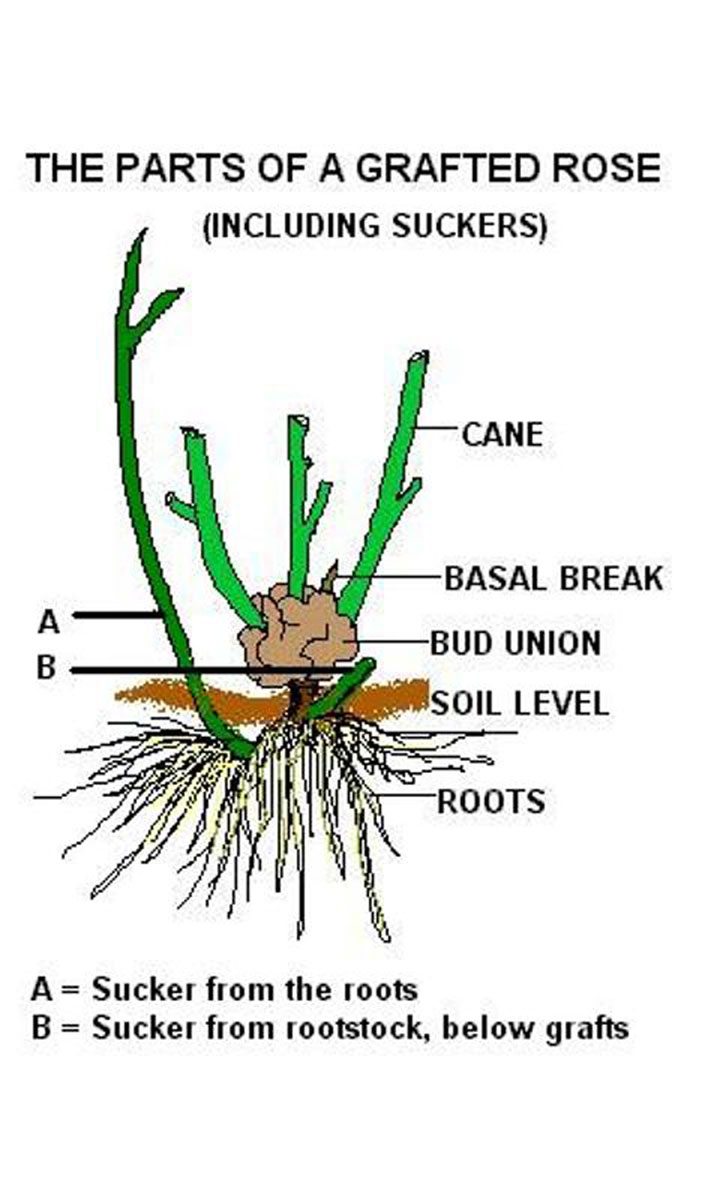
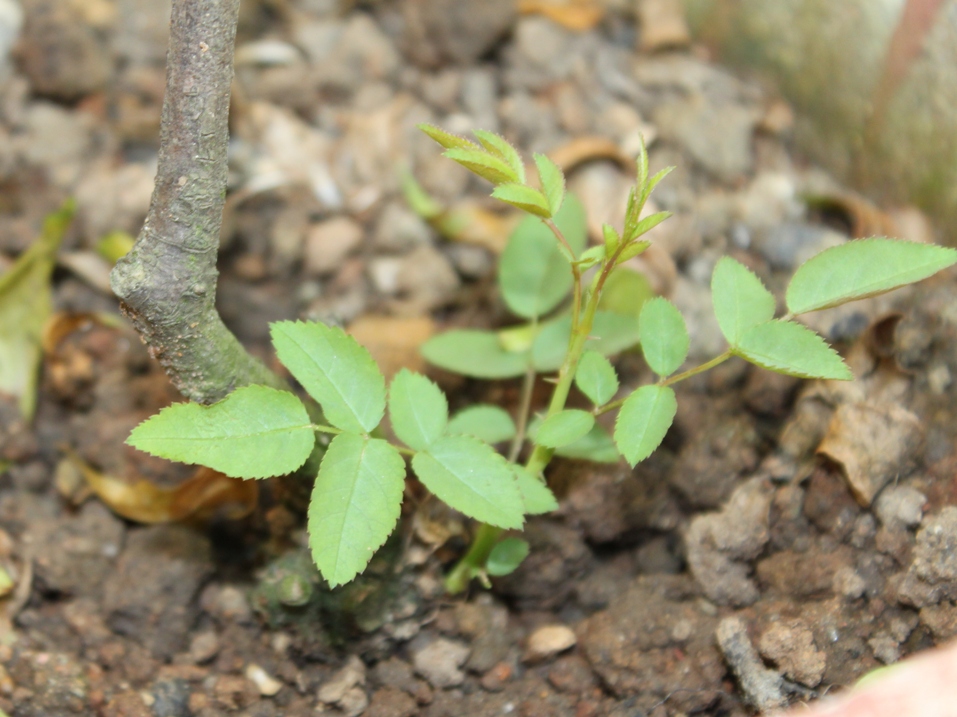
In cases of grafted rose plants suckers grow from the stock i.e. the mother plant. These suckers take up much nutrients and let the plant to reduce its growth and flowering. So how can it be identified? Simple, you will see that Suckers are the stems that will grow from below the place of grafting, near the ground. And normally roses have 5 leaved compound leaves but suckers have 7 leaved compound leaves. So you just need to cut it off.
Diseases and Cure
Here I have already mentioned many times that rose plants needs special care and are very prone to diseases like bacterial and fungal attack. And many insects attack roses.
Here also you can use organic medicines. To make it use baking soda 10ml, neem oil 10ml and a small amount of mild soap in 1 litre water. This should be sprayed at the earliest morning or before the sunrise and not only the upper portion of leaves to be sprayed but the underneath too. And as an inorganic medicine there are different types of fungicides available in the market. Use it but in less amount.
So get a Rose plant and have a plentifully of roses this winter. As it is now easier for you to grow plenty of gorgeous roses. For the beginners I will suggest that have a regular look over those plants.
To know more about your rose plants comment here and follow the site.



 Green Gardens